

You saved the photo, booked the appointment, and then your stylist asks the question you didn’t prepare for: wolf cut vs shag? Both haircuts have choppy layers, face-framing fringe, and a lived-in finish, so it’s easy to assume they are the same thing. They aren’t, and picking the wrong one can mean a cut that feels too heavy, too short at the crown, or harder to grow out than you expected.
This guide breaks down wolf cut vs shag in plain terms, so you can choose with confidence. You’ll learn a simple 3-inch rule, a back view test, how each cut works on straight, wavy, curly, fine, and thick hair, and exactly what to tell your stylist. By the end, you will know which cut fits your hair type, face shape, and daily routine.
Wolf Cut vs Shag: The Real Difference
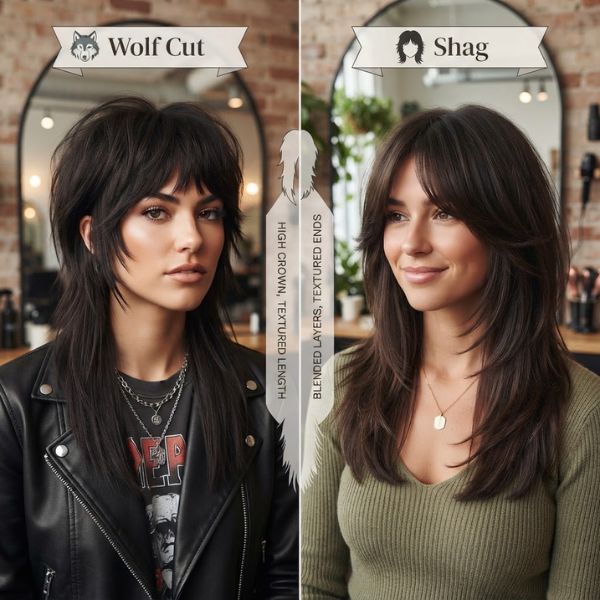
The short answer: A shag is a layered cut with soft, connected layers that blend from top to bottom. A wolf cut is a shag with mullet influence, which means short, choppy crown layers and a longer, wispy back that can look slightly disconnected.
Stylists admit the line is blurry. Even trade publications note the wolf cut has no exact definition and depends on how a stylist reads the photo. That is why a practical test helps.
Here is a quick comparison:
| Feature | Shag | Wolf Cut |
| Origin | 1970s rock and film era | 2020s revival, blending shag and mullet |
| Crown layers | Moderate, blended | Short, choppy, high |
| Back | Connected, graduated | Longer tail, often stepped |
| Fringe | Curtain bangs or full fringe | Shaggy bangs that merge into crown layers |
| Overall shape | Rounded, soft | Triangular, edgy |
| Styling effort | Low to medium | Medium |
Think of it this way. The shag is the foundation. The wolf cut is the shag with the volume turned up on top and a tail left behind.
The 3-Inch Rule
This is a simple field test you can use before you ever sit in the chair. It is a rule of thumb, not an official industry term.
Compare your shortest crown layer to the length at the back.
- Hold the top layer at your crown straight out from your head.
- Note where it ends.
- Compare that to the longest piece at the nape.
If the difference is under 3 inches, you have a shag. The layers move gradually, so the shape stays soft.
If the difference is more than 3 inches, you are in wolf cut territory. The top is much shorter than the back, which creates the signature jagged, tapered silhouette.
On shoulder length hair, this rule works well. On very long hair, scale it up, since a 3 inch gap on 20 inch hair looks subtle. The rule is only a starting point, but it gives you and your stylist a shared number to discuss.
The Back View Test
Most inspiration photos show the front. The back is where the two cuts split most clearly.
Take a photo of your head from behind, or look at the reference picture you saved.
A shag from behind:
- The layers stack in smooth steps
- The outline looks rounded or softly square
- No visible jump between the top and the length below
A wolf cut from behind:
- A clear step where short layers meet longer lengths
- A tapered, almost V shaped or triangular outline
- Wispy ends that look piecey
If you see a distinct “tail” or a section that looks like it belongs to a different haircut, that is the wolf cut’s mullet DNA.
Which One Gets You What
Choose a shag if you want:
- A softer, retro look that still reads polished
- Easier grow-out
- Volume without drastic shortness at the crown
- A cut that works for office and weekends
Choose a wolf cut if you want:
- A bold silhouette people notice
- Maximum texture and volume at the top
- A statement look with a punk or alt edge
- Movement that looks great with a bit of grunge styling
Hair Type Breakdown
Hair texture changes the result more than most people expect. A cut that looks great on a model with thick waves can fall flat on fine, straight hair.
Wolf Cut VS Shag Straight Hair
Straight hair shows every layer, which is good and bad. A shag on straight hair looks sleek, with soft ends and visible movement. A wolf cut on straight hair looks sharper and more dramatic, but needs texturizing spray or sea salt spray to avoid looking flat.
Best pick: Shag for a polished look, wolf cut if you like an edgy, piecey finish.
Wolf Cut VS Shag Wavy Hair

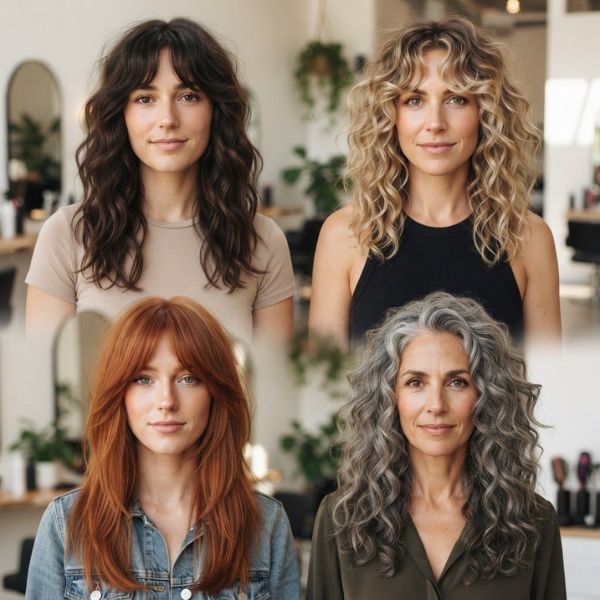
Wavy hair is where both cuts shine. Layers lift the waves and stop them from collapsing into a triangle. A shag keeps the wave pattern even. A wolf cut makes waves bouncier at the crown and more defined at the ends.
Best pick: Either works. Choose the wolf cut for volume and the shag for balance.
Wolf Cut VS Shag Curly Hair

Curly hair shrinks when it dries, so layers need careful planning. Cutting too short at the crown can create a pyramid shape. A shag cut on dry curls gives a rounded, flattering outline. A wolf cut on curls looks striking but needs a stylist who knows curly hair, because the short top layers will spring up higher than they look wet.
Best pick: Shag for first timers, wolf cut if your stylist cuts curls dry.
Wolf Cut VS Shag Fine Hair

Fine hair needs the illusion of density. Heavy layering can thin out the ends and expose the scalp. A shag adds volume without removing too much weight. A wolf cut works only if your strand count is decent and the stylist keeps the ends from becoming see through.
Best pick: Shag. If you want a wolf cut, ask for longer minimum layers.
Wolf Cut VS Shag Thick Hair

Thick hair carries a wolf cut very well. The short crown layers remove bulk and the longer back keeps weight where you want it. A shag also works, but thick hair may need extra thinning to avoid a heavy, triangular shape.
Best pick: Wolf cut for weight removal, shag for a rounder look.
Face Shape Reality
Face shape guides are often too rigid. Layers can be adjusted to suit almost any face, but a few general patterns help.
- Oval: Both cuts work. You have the most freedom.
- Round: A shag with longer face framing layers adds length. A wolf cut with a lot of crown volume adds height, which also elongates.
- Square: Soft, curved layers in a shag soften the jawline. A wolf cut with side swept bangs does the same.
- Heart: Wispy bangs balance a wider forehead. Keep volume lower than the cheekbones if you choose a wolf cut.
- Long: Avoid too much height at the crown. A shag with fringe shortens the face visually.
The point is simple. Face shape matters, but fringe placement and layer height matter more. A good stylist can adapt either cut.
The Grow-Out Fork
Every haircut has an expiry date. How it ages is something most articles skip, and it can decide whether you stay happy with it.
Shag grow-out:
- Looks decent at 8 to 10 weeks
- Layers soften instead of turning awkward
- Fringe can be pinned back easily
- You can switch to long layers without a full reset
The shag grows out gracefully. It is the safer choice if you dislike frequent salon trips.
Wolf cut grow-out:

- Starts to look heavy around the crown at 6 to 8 weeks
- Short layers can poke out at odd angles
- The tail grows longer, which makes the shape look more like a mullet
- Often needs a reshape around week 8 to look intentional
If you like constant change, the wolf cut is fun. If you want a low commitment style, the shag is easier to live with.
Celebrity Photo Grid
Seeing the cuts on real people helps. These examples are approximate. Always bring a current photo to your stylist, since celebrity hair changes often.
For women:
Kristen Stewart

Stewart is closely tied to the edgy, lived-in shag and mullet-leaning looks. Her hair often shows heavy texture and a messy, undone finish that reads as effortless.
Read More: Best Wolf Cut for Oval Face Shape: Complete Matching Guide
Miley Cyrus

Cyrus has worn shag and mullet blends that sit near the shullet and wolf cut zone. Her cut leans bold, with short crown layers and a longer back.
Billie Eilish

Eilish has experimented with shaggy, layered styles with dark roots and heavy texture. Her looks show how layers can work with long hair too.
For men:
Timothée Chalamet

Chalamet has worn tousled, mid length layered styles with natural wave. This is a good reference for a soft, shag style on men.
Jacob Elordi

Elordi has been photographed with longer, textured layers and a loose, shaggy shape. It is a good example of how a relaxed layered cut can look rugged without being extreme.
Both cuts work for men and women. The difference is in length and layer height, not gender.
What to Tell Your Stylist
Walking in with only the word “shag” or “wolf cut” can lead to a mismatch. Be specific.
Use this checklist:
- Bring 2 to 3 photos of the front and the back
- State the shape: “I want it soft and connected” (shag) or “I want short crown layers and a longer back” (wolf cut)
- Mention the 3 inch gap if you have measured it
- Describe the fringe: curtain bangs, shaggy bangs, or none
- Share your hair type: fine, thick, curly, straight
- Explain your routine: air dry, blow dry, or heat free
- Ask about maintenance: “How often will I need a trim?”
A sample script:
“I want a shag with soft curtain bangs. The layers should blend into the back, with no visible disconnect. I have fine, wavy hair, so please avoid over thinning.”
or
“I want a wolf cut with a bold crown and a longer tail. I have thick hair, so remove weight at the top and keep the ends wispy.”
Clear language saves you from a second appointment.
Read More:
FAQ’s:
Is a wolf cut the same as a shag?
No. A wolf cut is a shag with mullet influence, featuring shorter crown layers and a longer back.
Which is lower maintenance, a wolf cut or a shag?
A shag is usually easier. It grows out more gently and needs fewer reshaping visits.
What is the 3 inch rule?
It is a rule of thumb. If the crown layers are over 3 inches shorter than the back length, the cut is a wolf cut.
Does a wolf cut suit fine hair?
It can, but a shag is usually safer. Ask your stylist to keep the shortest layers longer.
Can curly hair get a wolf cut or shag?
Yes. A shag is easier for beginners, and a wolf cut needs a stylist who cuts curls dry.
How often should I trim a wolf cut?
Every 6 to 8 weeks keeps the shape sharp.
How often should I trim a shag?
Every 8 to 12 weeks is usually enough.
Can men get a shag or wolf cut?
Yes. Both cuts work on any gender, depending on length and layering.
Conclusion
The wolf cut vs shag decision is easier once you stop relying on names and start looking at structure. Measure the gap with the 3-inch rule, check the back view, and match the cut to your hair type and lifestyle.
Choose the shag for a softer, easier, more forgiving cut. Choose the wolf cut vs shag for a bold, high-texture look you are happy to maintain. Whichever you pick, bring photos from the front and back, and use clear words with your stylist. That is the surest way to leave the salon with the haircut you actually wanted.