
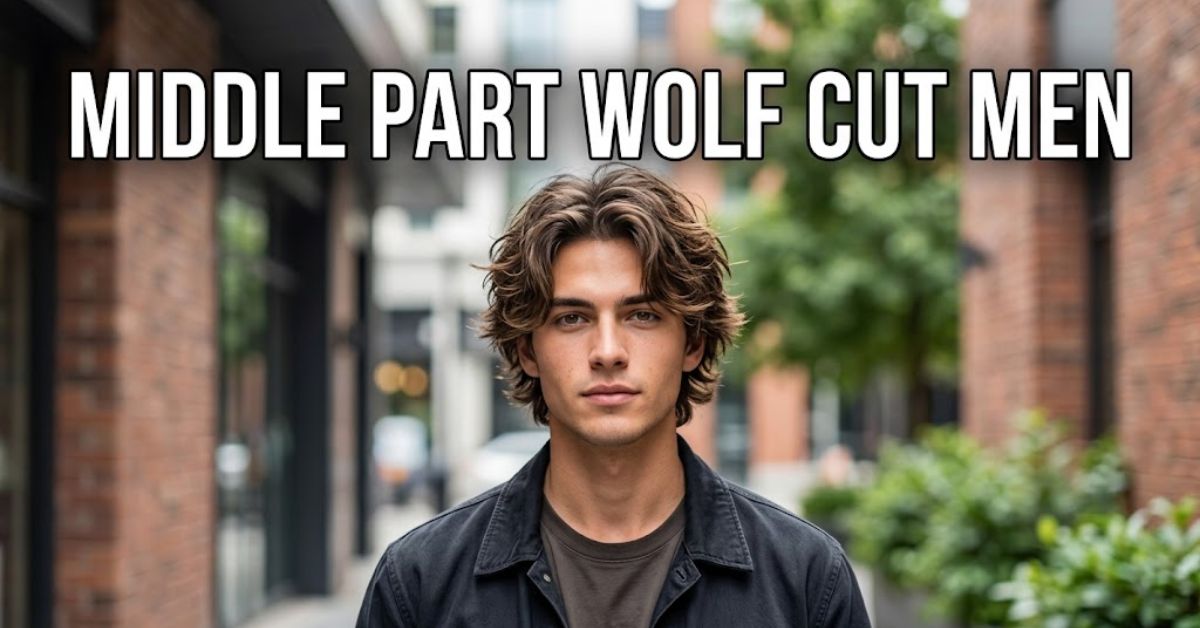
If you’ve been scrolling through barbershop inspiration and can’t decide between a short, punchy wolf cut or a long, dramatic one, there’s a reason the medium version keeps showing up in 2026. It gives you the volume and texture the wolf cut is known for, without the commitment of growing out a full mullet-length back or the constant upkeep a short crop demands.
This guide covers exactly what a medium wolf cut is, who it suits, how to describe it to your barber so you don’t leave with the wrong cut, and how to style and maintain it week to week. By the end, you’ll know whether this length is actually your sweet spot or if you should be asking for something shorter or longer instead.
What Is a Medium Hair Wolf Cut Men?
A medium wolf cut sits in the middle of the wolf cut spectrum, generally falling somewhere between the ears and the collarbone. It keeps the two defining traits of any wolf cut:
- Short, choppy layers stacked at the crown for volume and lift
- Longer, feathered pieces through the lengths and around the face
What separates the medium version from its shorter and longer cousins is balance. There’s enough length in the back and sides to show real movement and layering, but not so much that the cut needs constant product or careful styling to avoid looking flat or heavy.
Think of it as the wolf cut’s most wearable form. It suits office settings almost as easily as it suits a weekend look, which is a big part of why it’s become the most requested length in 2026.
Medium Wolf Cut vs. Short vs. Long: Why Medium Wins
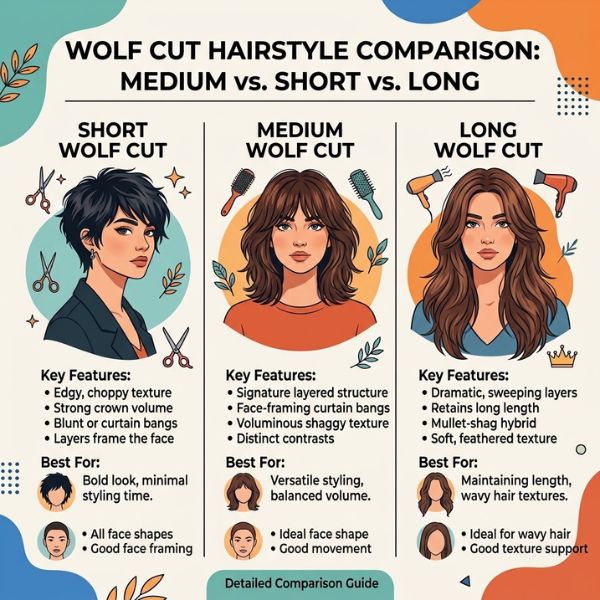
Each length version of the wolf cut has a different personality, and comparing them side by side makes it obvious why medium has become the default recommendation for most men.
| Length | Best For | Maintenance | Styling Effort |
| Short wolf cut | Fine hair, receding hairlines, low upkeep | Frequent trims every 3 to 4 weeks | Minimal, dries fast |
| Medium wolf cut | Most face shapes and hair types | Trims every 5 to 6 weeks | Low to moderate |
| Long wolf cut | Thick hair, wavy or curly texture | Less frequent trims, but layers need upkeep | Higher, more product needed |
The short wolf cut grows out quickly and can lose its shape within a few weeks, which means more frequent barber visits. The long wolf cut looks fantastic on the right hair type but demands more daily styling to keep the layers from collapsing into a shapeless mass.
The medium wolf cut sidesteps both problems. It holds its shape longer than the short version and requires far less daily effort than the long version, which is exactly why it’s earned the reputation as the sweet spot length.
Who Should Get a Medium Wolf Cut?

Not every face shape or hair type gets equal benefit from this length, though it’s genuinely one of the more forgiving wolf cut variations.
Face Shapes That Win
- Oval faces suit almost any version of the medium wolf cut, since there’s no proportion to correct.
- Square faces benefit from the softer, feathered pieces around the jaw, which take the edge off strong angles.
- Round faces do well with extra crown volume and side-swept layers, which add height and break up width.
- Long or rectangular faces should ask for fuller sides and less height at the crown, so the cut doesn’t add unwanted length.
Hair Types That Work
The medium wolf cut is genuinely one of the more flexible lengths when it comes to hair type.
- Straight hair shows off the choppy layering clearly and styles quickly with minimal product.
- Wavy hair pairs naturally with this length, since the waves add texture without extra effort.
- Curly hair benefits from a slightly longer medium length, which helps control volume while still showing definition.
- Thick hair usually needs some thinning through the mid-lengths to prevent the cut from looking bulky at this length.
- Fine hair holds crown volume well at medium length, though a lightweight mousse helps maintain lift through the day.
How to Ask Your Barber for a Medium Wolf Cut
Vague requests lead to inconsistent results, and the wolf cut is a style where terminology really matters. Being specific about length, layering, and finish gives your barber a clear blueprint to work from.
The Exact Script
Use this as a starting point during your consultation:
“I want a medium wolf cut, somewhere between my ears and my collarbone. Keep the crown short and choppy for volume, and leave the sides and back longer with heavy layering. I’d like a razor used on the ends for a softer, textured finish, not blunt scissor lines. Keep the sideburns and around the ears a little longer to blend into the length, and add face-framing pieces at the front rather than a straight fringe.”
A few additional details worth mentioning:
- Bring two or three reference photos from different angles, since a single front-facing photo doesn’t show how the back and sides should be shaped.
- Mention your hair type upfront, especially if it’s thick or curly, so your barber can adjust the layering technique accordingly.
- Ask whether they recommend a razor cut or point cutting for your texture, since both create different levels of choppiness.
3 Ways to Style a Medium Wolf Cut Daily
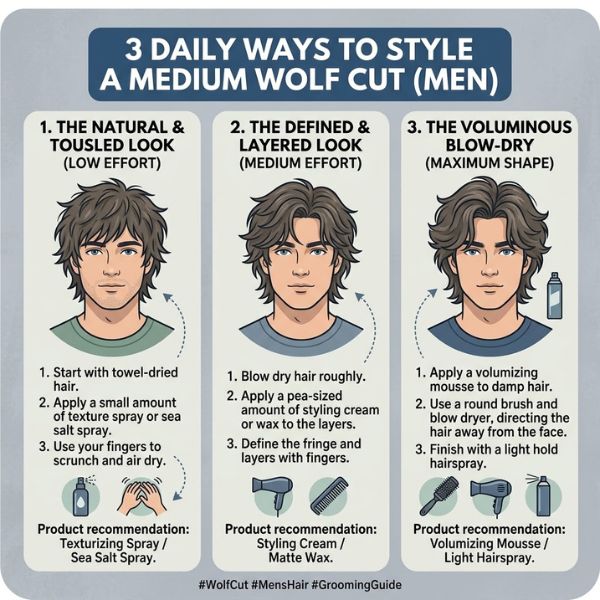
One of the biggest advantages of this length is versatility. The same cut can look completely different depending on how it’s styled, which makes it easy to switch between casual and polished looks without a fresh haircut.
Style 1: Textured Forward (Casual, Everyday)
This is the classic, lived-in wolf cut look. Apply a small amount of sea salt spray or texturizing paste to damp hair, then use your fingers to push the crown layers slightly forward and outward for volume. Let the face-framing pieces fall naturally rather than pushing them back. This style takes under five minutes and works well for everyday wear.
Style 2: Slicked Back (Professional, Clean)
For a more polished, work-appropriate finish, apply a matte styling cream or light-hold pomade to damp hair and comb everything back and away from the face. The layering still shows through in the texture, but the overall silhouette looks tidier and more controlled, which makes this option ideal for the office or formal settings.
Style 3: Natural Flow (Effortless, Air-Dried)
This is the lowest effort option. Apply a lightweight leave-in product or light mousse right after showering, then let the hair air dry without touching it. The natural fall of the layers does most of the work, and this style is especially effective for wavy or curly hair types that already have built-in movement.
Read More: Color Wolf Cut for Men and Women: Best Dye Wolf Cut Ideas With Complete Guide
Medium Wolf Cut Maintenance: The 5-6 Week Sweet Spot
Maintenance is where the medium wolf cut really earns its reputation as the most practical length option.
Daily Styling (3-5 Minutes)
- Apply a small amount of texturizing spray, mousse, or matte cream to damp or dry hair.
- Use fingers rather than a comb to keep the layers looking separated and natural, not flat.
- Avoid heavy oils or thick creams, which weigh down the crown volume that defines the cut.
Weekly Care (15 Minutes)
- Wash with a volumizing shampoo once or twice a week rather than daily, since overwashing strips natural oils and can make layers look thin.
- Use a lightweight conditioner focused on the mid-lengths and ends, avoiding the roots to protect crown volume.
- A deep conditioning treatment every one to two weeks helps keep the feathered ends from looking dry or frizzy, especially if the hair has any color treatment.
The 5-6 Week Trim
Unlike the short wolf cut, which often needs attention every three to four weeks, the medium length holds its shape well for five to six weeks before the layers start to grow out and lose definition. At each trim, ask your barber to maintain the existing shape rather than cutting it shorter, unless you’re intentionally transitioning to a shorter version of the cut.
Common Medium Wolf Cut Mistakes
Even a great length can look off if these details get missed during the cut or the daily styling routine.
- Skipping crown layering, which leaves the cut looking flat instead of voluminous
- Using too much heavy product, which weighs down the layers and kills the texture
- Going too long between trims, which lets the choppy shape grow out into a shapeless, overgrown look
- Choosing blunt scissor cuts over a razor finish, which removes the soft, feathered quality that defines the style
- Ignoring hair type during the consultation, since thick or curly hair often needs different layering than straight hair
- Styling the same way every day, which can make the cut feel repetitive when it’s actually built for versatility
FAQ’s:
What length counts as a medium wolf cut for men?
Generally anywhere from ear length to collarbone length, with short layers at the crown and longer feathered pieces through the rest.
How often should I get a medium wolf cut trimmed?
Every 5 to 6 weeks is the sweet spot for keeping the shape and layering intact without losing length too quickly.
Is a medium wolf cut good for thick hair?
Yes, though thick hair often benefits from some thinning through the mid-lengths to prevent the cut from looking bulky.
Can I switch between styling looks with a medium wolf cut?
Yes, this length is versatile enough to go from a casual textured look to a slicked back, professional finish using different products.
Does a medium wolf cut suit curly hair?
Yes, curly hair works especially well at this length since the natural texture adds movement without extra styling effort.
What products are essential for a medium wolf cut?
A texturizing spray or paste for daily volume, a lightweight conditioner, and an occasional deep conditioning treatment cover most needs.
Conclusion
The medium wolf cut earns its reputation as the sweet spot for a reason. It delivers the volume, texture, and movement that make the wolf cut such a popular style, while staying easier to maintain and style than either the short or long versions.
Whether your priority is a low-effort morning routine, a cut that transitions from casual to professional, or a style that genuinely suits most face shapes and hair types, this length checks nearly every box. Bring a clear description, or better yet a few reference photos, to your next barber appointment, and you’ll walk out with a cut that holds its shape for weeks, not days.