

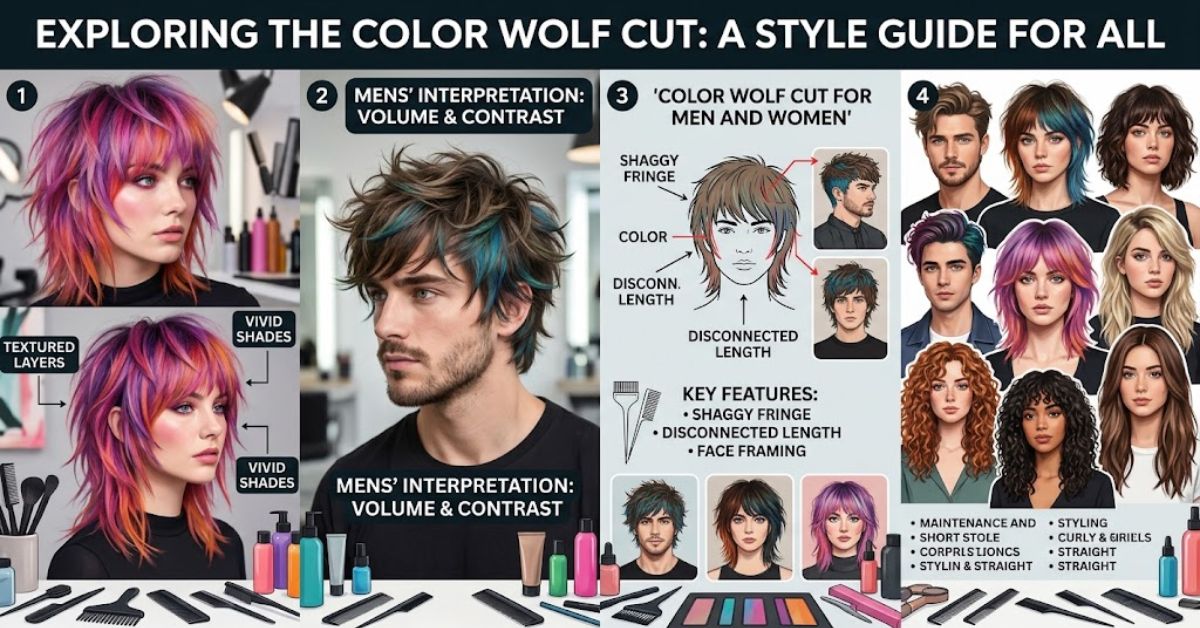
A Color Wolf Cut for Men and Women already brings drama through its shape, with a full crown, choppy layers, and long wispy ends borrowed from a shag and a mullet. Add color into that mix, and the layers stop being just texture. They become a canvas. Every choppy piece catches light differently, every face-framing strand can carry a different tone, and even a single money piece can change how the whole cut reads.
This guide breaks down exactly which colors work for women, which work for men, how bleach interacts with the wolf cut’s structure, and how much upkeep each color choice really demands. Whether you want a subtle balayage or a full vivid transformation, you’ll know what to ask your colorist for before you sit in the chair.
What Is a Color Wolf Cut?
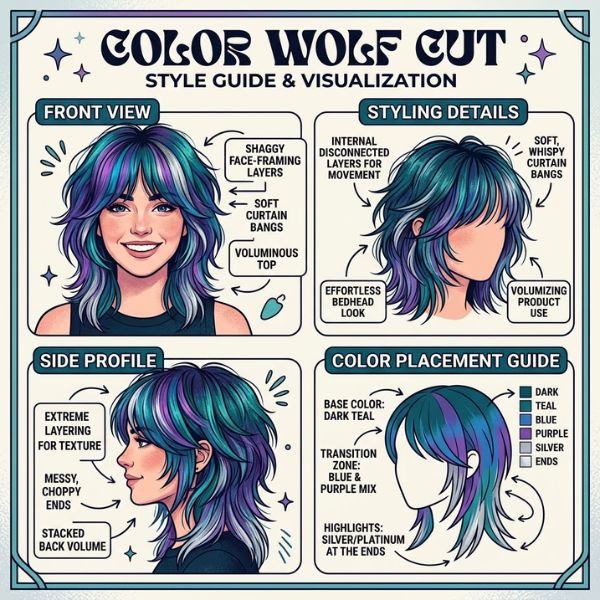
A color wolf cut is simply a wolf cut styled with an intentional color technique rather than a single flat shade. Because the cut is built from short crown layers and long, uneven ends, it naturally creates multiple planes for color to sit on.
That structure is what makes the wolf cut such a popular base for color work. A balayage placed on a blunt bob moves in one direction. The same balayage placed on a wolf cut catches every layer separately, so the color looks like it has depth and movement even before you touch a curling iron.
Common approaches include:
- Full balayage or highlights across the lengths
- A single bold shade applied all over
- Two colors split between the top and the ends
- Color concentrated only around the face
Each of these reacts differently depending on the wearer’s base color, hair texture, and how choppy the layering is.
Hair Colors That Work on Women
Women’s wolf cuts tend to have more length in the back, which gives colorists more room to blend, split, or paint. These four approaches consistently work well.
Natural Highlights and Balayage
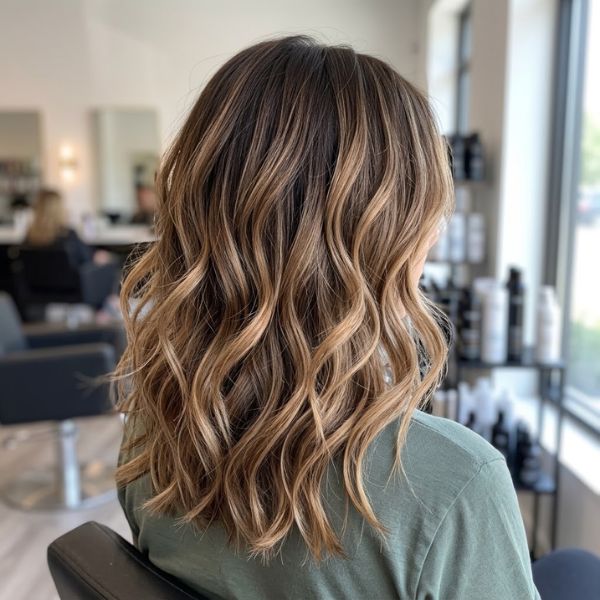
Balayage is hand painted, so it follows the direction of each layer instead of sitting in uniform blocks. On a wolf cut, that means the color lands differently on the short crown pieces than it does on the long back sections, which adds real dimension.
Balayage works best on base shades ranging from dark blonde to medium brown. Going too dark limits how much lift the balayage can achieve without heavy bleaching, and going too light can make the highlights blend in so much that the effect barely shows.
Vivid and Fantasy Colors
Pink, blue, green, and purple all show up beautifully on a wolf cut because the choppy, uneven ends absorb dye unevenly, which creates natural-looking variation instead of one flat block of color.
A few things to know before going vivid:
- Bright, saturated shades usually need a pre-lightened base, often level 9 or 10 blonde, especially for pastels.
- Vivid color fades fastest at the ends, since porous, bleached hair loses pigment quicker than the roots.
- Refreshing the color every 3 to 4 weeks keeps bright tones from turning dull or muddy.
Deeper vivids like teal or emerald can show up well on darker bases with strategic pre-lightening, while true pastels almost always require a fully blonde canvas to read correctly.
Two-Tone and Split Dye
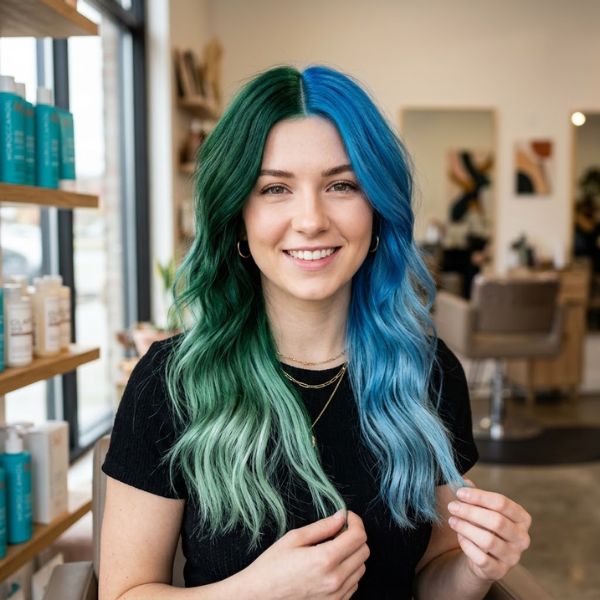
Split dye styles place one color on top and a completely different one underneath or through the ends. This technique plays directly into the wolf cut’s built-in contrast between short crown layers and long face-framing pieces.
A popular combination pairs a bold top shade, like fiery red or jet black, with a softer or lighter tone through the lower layers. Because the wolf cut already separates the hair into distinct sections by length, split dye reads cleanly instead of looking accidental.
Face-Framing Money Pieces
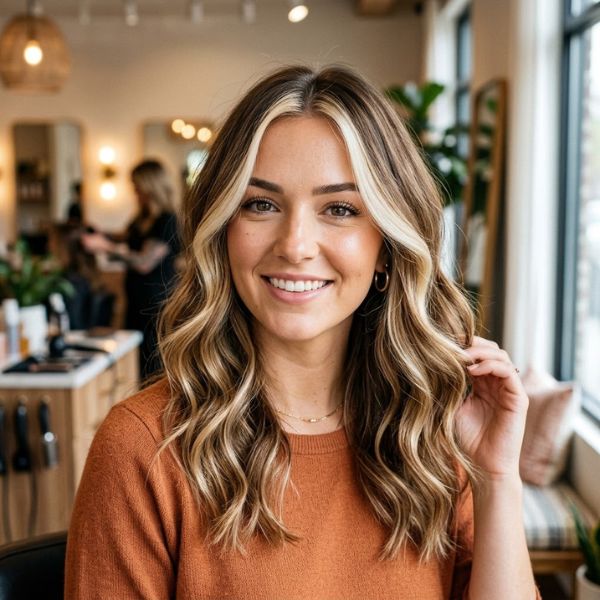
A money piece places brighter color specifically around the face while leaving the rest of the hair closer to its natural shade. Since the wolf cut already has dedicated face-framing layers, the money piece simply rides along those pieces and naturally draws attention toward the eyes and cheekbones.
This is one of the lowest-maintenance color options on this list, since regrowth is far less noticeable when only a small section near the face is lightened.
Hair Colors That Work on Men
Men’s wolf cuts usually run shorter overall, with a tighter taper on the sides, so color choices tend to focus more on tonal contrast than on multiple techniques layered together.
Natural Tones and Salt-and-Pepper

Natural color, including a blended salt-and-pepper look, pairs well with a wolf cut because the layered top already adds texture and movement. Rather than fighting the grey, many barbers now blend it intentionally, softening the transition between grey and natural color instead of covering it completely.
Choosing between a cooler icy tone or a warmer charcoal blend usually comes down to skin undertone, with cooler undertones suiting silvery greys and warmer undertones suiting a neutral, warmer blend.
Bleached and Platinum
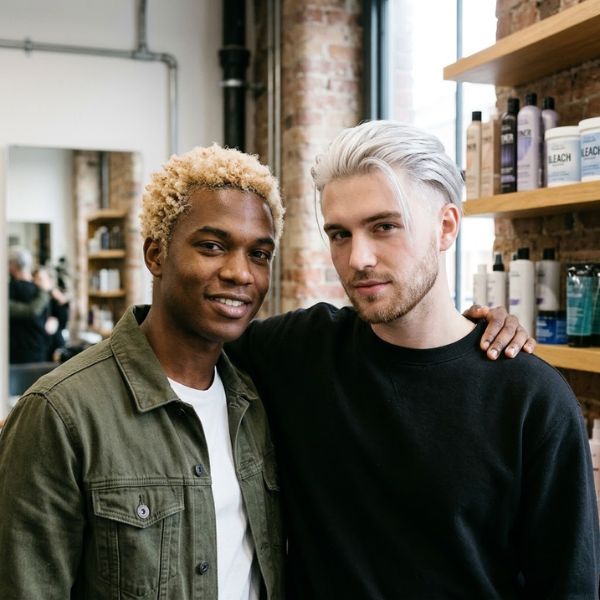
A full platinum wolf cut is one of the boldest options for men and works especially well on shorter versions of the cut, where the choppy top layers catch light and emphasize texture. Because platinum requires heavy lightening, root touch ups become a real consideration, though some men choose to let the roots grow out intentionally for a lower-maintenance, shadow-root effect.
Vivid Color on Men
Vivid shades are no longer reserved for women’s cuts. Blues, greens, and even fantasy colors are increasingly common on men’s wolf cuts, particularly on the shorter, choppier versions where color changes are easy to see. As with any vivid shade, a lighter pre-lightened base produces a truer, longer-lasting color.
Dark and Jet Black
Jet black remains one of the most requested shades for men’s wolf cuts, especially paired with red, blue, or silver underneath layers for a subtle pop of color that only shows through movement. Solid black also requires the least maintenance of any color option, since there’s no root contrast to manage.
How Bleach Changes Color Wolf Cut for Men and Women
Bleach doesn’t just lighten hair, it also changes how the cut behaves day to day, and that matters a lot for a style built entirely around movement and texture.
- Bleached hair becomes more porous, which means it often looks softer and slightly more textured, since the cuticle no longer lies as flat.
- Heavily bleached ends can feel drier and more prone to breakage, which affects how well the wispy, feathered tips of a wolf cut hold their shape.
- Over-lightened hair sometimes loses natural bounce, so many colorists recommend adding extra layering or using a bonding treatment to keep the choppy ends from looking limp.
- Because bleach opens the hair cuticle, color grabs unevenly on porous ends, which is actually part of why vivid colors look so dynamic on a wolf cut instead of flat.
The takeaway is simple. Bleach enhances the wolf cut’s texture in small doses but can undercut the very movement that makes the cut work if it’s overdone without proper conditioning.
Maintenance by Color Type
Not every color wolf cut requires the same upkeep, and knowing this ahead of time helps set realistic expectations before your appointment.
- Natural highlights and balayage: Low to moderate maintenance, with most people needing a refresh every 8 to 12 weeks since the hand-painted technique grows out softly.
- Money pieces: Among the lowest maintenance color options, since regrowth is limited to a small, targeted section near the face.
- Vivid and fantasy colors: High maintenance, typically needing a color refresh every 3 to 4 weeks to keep brightness from fading into a dull, washed-out tone.
- Split dye and two-tone color: Moderate maintenance, since the line between the two colors needs occasional touch ups to stay crisp, especially at the root.
- Platinum and full bleach: High maintenance, generally requiring root touch ups every 4 to 6 weeks along with regular bond-repair treatments to protect hair health.
- Solid natural or black tones: Lowest maintenance overall, since there is no dramatic root line to manage between salon visits.
Regardless of color choice, regular trims every 8 to 12 weeks help keep the wolf cut’s shape sharp, since overgrown layers can dull the visual effect of any color technique.
Color Wolf Cuts on Different Textures
Hair texture changes how any given color technique actually performs once it’s out of the salon chair.
On straight hair, balayage and split dye tend to look the most graphic and clean, since there’s less natural movement to soften the line between colors. Vivid colors also show up more vividly on straight strands because light reflects more evenly across a smooth surface.
On wavy or curly hair, color naturally blends and softens, which makes techniques like balayage or a money piece look especially seamless. Curls also tend to fade vivid color a bit faster near the ends, since curl patterns often mean more porous, previously processed hair.
On thick, coarse hair, colorists often recommend extra layering or thinning before applying vivid or bleached color, since bulk can trap product and lead to uneven processing.
On fine hair, lighter techniques like a money piece or subtle highlights usually work better than a heavy, full-head bleach, since fine strands can look overly processed and brittle under intense lightening.
Read More: Is a Wolf Cut Good for a Round Face? A Complete Styling Guide
FAQ’s:
Does a color wolf cut work on short hair?
Yes, shorter wolf cuts actually show color changes more clearly since there’s less length to dilute the effect.
How often do I need to touch up a color wolf cut?
It depends on the technique, ranging from every 3 to 4 weeks for vivid shades to every 8 to 12 weeks for natural highlights or money pieces.
Is bleach necessary for a color wolf cut?
Not always. Natural highlights and darker vivid tones can work on unbleached hair, though true pastels and platinum shades require significant pre-lightening.
Can men get vivid colors on a wolf cut?
Absolutely. Vivid shades are increasingly common on men’s wolf cuts, especially on shorter, choppier versions where the color is easy to see.
What color wolf cut requires the least maintenance?
Solid natural tones or a money piece are the lowest maintenance options, since neither requires managing a dramatic root line.
Does hair texture affect how color looks on a wolf cut?
Yes. Straight hair shows crisp, graphic color lines, while wavy or curly hair blends color more softly and naturally.
Conclusion
A color wolf cut takes an already dynamic haircut and gives it another layer of personality. Whether you choose a soft, natural balayage, a bold vivid transformation, or a simple money piece, the wolf cut’s built-in structure of short crown layers and long, choppy ends makes almost every color technique look intentional rather than accidental. The right choice really comes down to how much maintenance you’re willing to commit to, your natural base color, and your hair’s texture. Bring reference photos to your colorist, ask specifically about upkeep, and you’ll walk out with a color wolf cut that looks as good in six weeks as it does on day one.